Xi's Anti-Corruption Drive
Xi Jinping’s anti-corruption campaign, launched shortly after he assumed Party leadership in late 2012, is the most sweeping and institutionally consequential crackdown in the post-Mao era. Although China has conducted at least six major anti-corruption drives since 1982, this campaign differs sharply in scope, duration, and institutional ambition. Rather than a short-lived disciplinary burst to manage scandals or stabilize legitimacy, it does include policies that could be construed as a shift toward credible commitments promoting structural reform. All those features were largely absent from earlier efforts.
The institutional center of the campaign was a reinvigorated Central Discipline Inspection Commission (CDIC). Discipline inspection committees had long held broad jurisdiction over ideological, procedural, and moral violations, but their effectiveness was historically constrained by “dual leadership” where local Party committees could shield their own networks. Xi’s reforms strengthened vertical control.
The CDIC deployed embedded offices in ministries, dramatically increased the use of roving inspection teams, and prohibited inspectors from serving in their own localities. These institutional innovations, combined with rapid rotation and tighter reporting rules, reduced opportunities for local interference. The center was in charge.
The intensity of the campaign was genuinely unprecedented. In 2013, discipline inspection bodies completed 173,000 cases and punished 182,000 officials; by 2014, the numbers rose to 218,000 cases and 232,000 punishments. From the 18th to the 20th Party Congress, 553 provincial or ministerial officials, over 25,000 prefecture - and bureau-level cadres, more than 182,000 county and department-level officials were investigated. Over four million cadres were investigated and 3.7 million punished by 2021.
Yet enforcement is only half the story. A defining but frequently overlooked—feature was the emphasis on corruption prevention. The campaign targeted the vast “tower of approvals” that structured state–business interactions. Between 2013 and 2017, China abolished or simplified thousands of national-level procedures (and tens of thousands locally), cutting required approvals to less than half of what they had been a decade earlier.
By reducing opportunities for rent extraction rather than merely prohibiting them, the reforms altered the underlying incentive structure in what Melanie Manion called transforming the regulatory “cage” into a real cage.
Moreover, the campaign advanced further than any previous effort by reaching into the People’s Liberation Army and breaking long-standing norms of elite immunity (most notably through the prosecution of former Politburo Standing Committee member Zhou Yongkang). This was not business as usual, but was it simple power consolidation?
Who were the targets?
Xi Jinping’s anti-corruption campaign was inevitably, officially framed as a neutral and meritocratic purge of graft. Rather than simply disciplining bad actors, the social science research cumulatively suggests that the campaign functioned as a mechanism of political recalibration, targeting certain types of officials and shifting the internal logic of promotion and loyalty within the Chinese Communist Party (CCP).
Core to understanding the efforts is the, in Xi et al.'s (2025) terms, the double-edged sword that corruption represents: it generates rents that bind ruling coalitions together, but it also breeds public resentment and encourages autonomy among economically successful local officials. In the face of growing risks — whether institutional, ideological, or reputational — leaders may switch from a permissive model, which tolerates graft in exchange for performance, to a punitive model, which recentralizes control and elevates ideological conformity.
To test these propositions, the authors compile an original dataset of 1,708 city-level leaders (mayors and party secretaries) from 1994 to 2021, drawing from official appointment records and disciplinary reports from the Central Commission for Discipline Inspection (CCDI). Before 2013 - that is before the Xi Jinping's anti-corruption drive took off - GDP growth was positively associated with promotion. After 2013, economic performance no longer predicted career advancement.
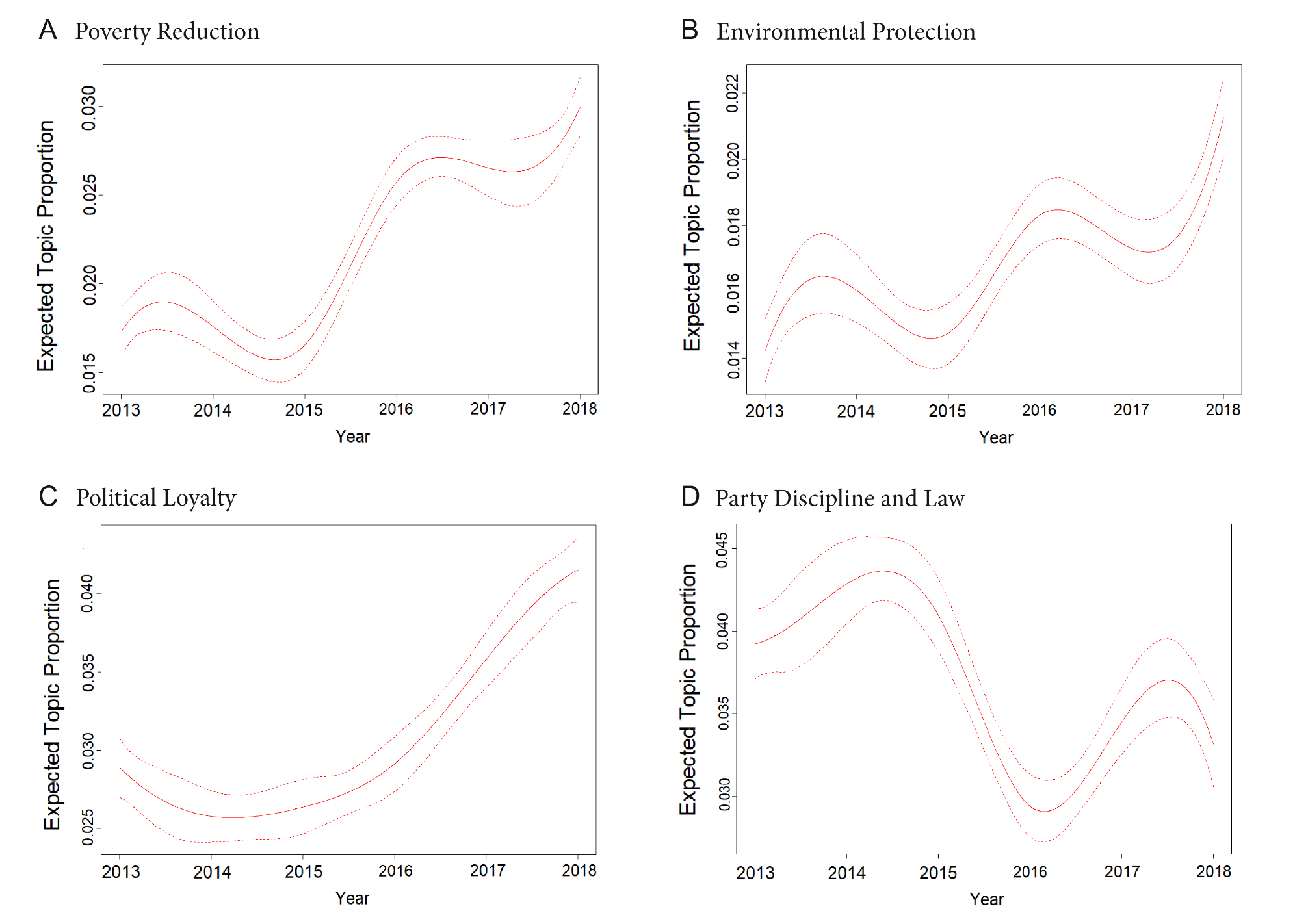
In the campaign’s early years, high-performing officials were more likely to be investigated for corruption, indicating a shift in selection incentives. Following the campaign, local government work reports show greater alignment with Xi's policy agenda, particularly “New Era” ideological slogans.
They assess this final trend using Structural Topic Modeling (STM) on over 1,200 annual work reports between 2013 and 2018, allowing them to track topic salience over time and quantify ideological alignent between mayoral officials and Xi, with a clear pattern of increased congruence.
But focusing on the corruption dilemma leaves open the question of whether a switch leads to specific targets. Lorentzen and Lu analyze promotion and arrest data across provinces to explore whether elite turnover followed systematic patterns. Using publicly available arrest reports, patronage networks, and official biographies, they shows that in provinces where top leaders were purged, meritocratic promotion rules broke down, and GDP performance ceased to matter. Arrests often followed deviations from desired promotion patterns, suggesting norm reinforcement rather than indiscriminate targeting.
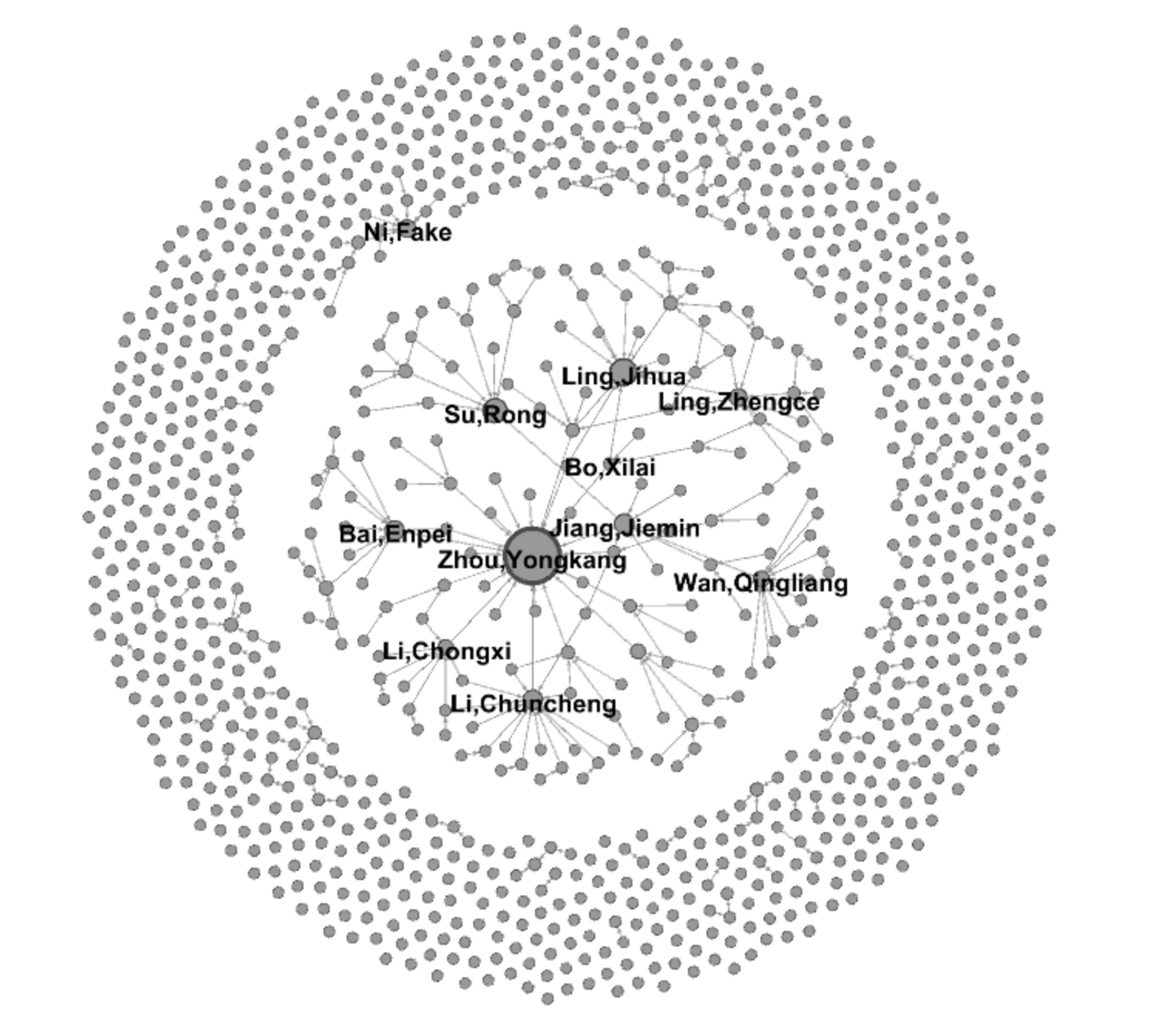
They also conduct a fascinating network analysis on the political connections of arrested officials. While some analysts viewed the campaign as a tool for personal power consolidation, his findings complicate that narrative. Ties to the Politburo Standing Committee did not predict protection. Personal ties to Xi or Premier Li Keqiang did, while provincial powerbrokers were disproportionately central in the disciplinary network.
Were these officials involved in bribery because they couldn't get by on their government salaries? Yang et al. (2024) collected detailed socio-economic profile of convicted officials between 2012 and 2021., information on personal characteristics, years of party membership, educational background, administrative level, and estimated illegal income. Most convicted officials already ranked in the top decile of China’s urban income distribution based on legal income alone. Yet, corruption boosted their incomes by 4.7x to 7x, allowing 83–91% to enter the top 1%.
Remarkably, the top 10% of perpetrators accounted for 58% of total corrupt income; the top 1% for 21%. These findings paint a picture of elite graft rather than petty bureaucratic bribery—puncturing the narrative that corruption was a diffuse, low-level phenomenon.
And that type of targeting extended into the private sector. Griffin et al. (2022) constructed a dataset of 408 publicly listed Chinese firms whose executives were investigated between 2012 and 2019. Their data combined a full panel of managerial turnover with over 2.3 million corporate disclosures, and news reports from 300 financial media outlets
They find that investigated firms were more likely to show signs of poor governance, self-dealing, or inefficient investments. However, political connections mattered too: local connections increased investigation risk, while ties to the central elite or shared alma maters with Xi’s faction decreased it. This dual pattern— of both disciplinary rationality and political selectivity — suggests the campaign was not merely strategic as per the standard narrative (most forcefully associated with Minxin Pei that Manion pushed back against), but also included real reform.
The Economic Effects of the Anti-Corruption Drive
Any analysis of the anti-corruption drive needs to again consider the dual role corruption can play in an economy: first, the developmental role corruption previously played under informal governance; and second, the consequences of disrupting this model. Drawing on rich empirical work, we now understand that the campaign not only curtailed rent-seeking but also reshaped the incentives and capabilities of local governments, producing contradictory costs and realignments.
Before the campaign, corruption in China notoriously functioned less as a drag and more as a lubricant in the machinery of local economic governance. Jiang (2018) shows that local officials with patronage ties to provincial leaders consistently delivered stronger economic growth.
Based on city-level panel data (2000–2011) and a novel method for detecting informal ties from career promotions, his analysis reveals that connected leaders generated an average of 0.38 percentage points more GDP growth annually than their unconnected peers, or roughly 275 million yuan in additional output for an average city. These personalist ties substituted for weak formal institutions and helped resolve principal-agent problems within the bureaucracy.
A similar logic is evident in Chen et al. (2021), who evaluate a 2004 corruption crackdown in Heilongjiang province. Using firm-level panel data covering 388,000 manufacturing enterprises from 1999–2007, they find that the crackdown reduced firm productivity and entry, particularly among private and foreign firms. These disruptions were likely driven by the collapse of informal mechanisms — bribes and guanxi — that firms had used to operate effectively within a state-dominated economy. State-owned enterprises (SOEs) were, however, unaffected.
The Crackdown as an Economic Shock to Competing Political Coalitions
Xi’s campaign upended this growth model. Shen et al. (2025) use a staggered difference-in-differences approach to estimate the impact of political shocks— specifically, the downfall of local officials’ patrons — on local economic outcomes. Their analysis covers over 300 prefecture-level cities between 2012 and 2019.
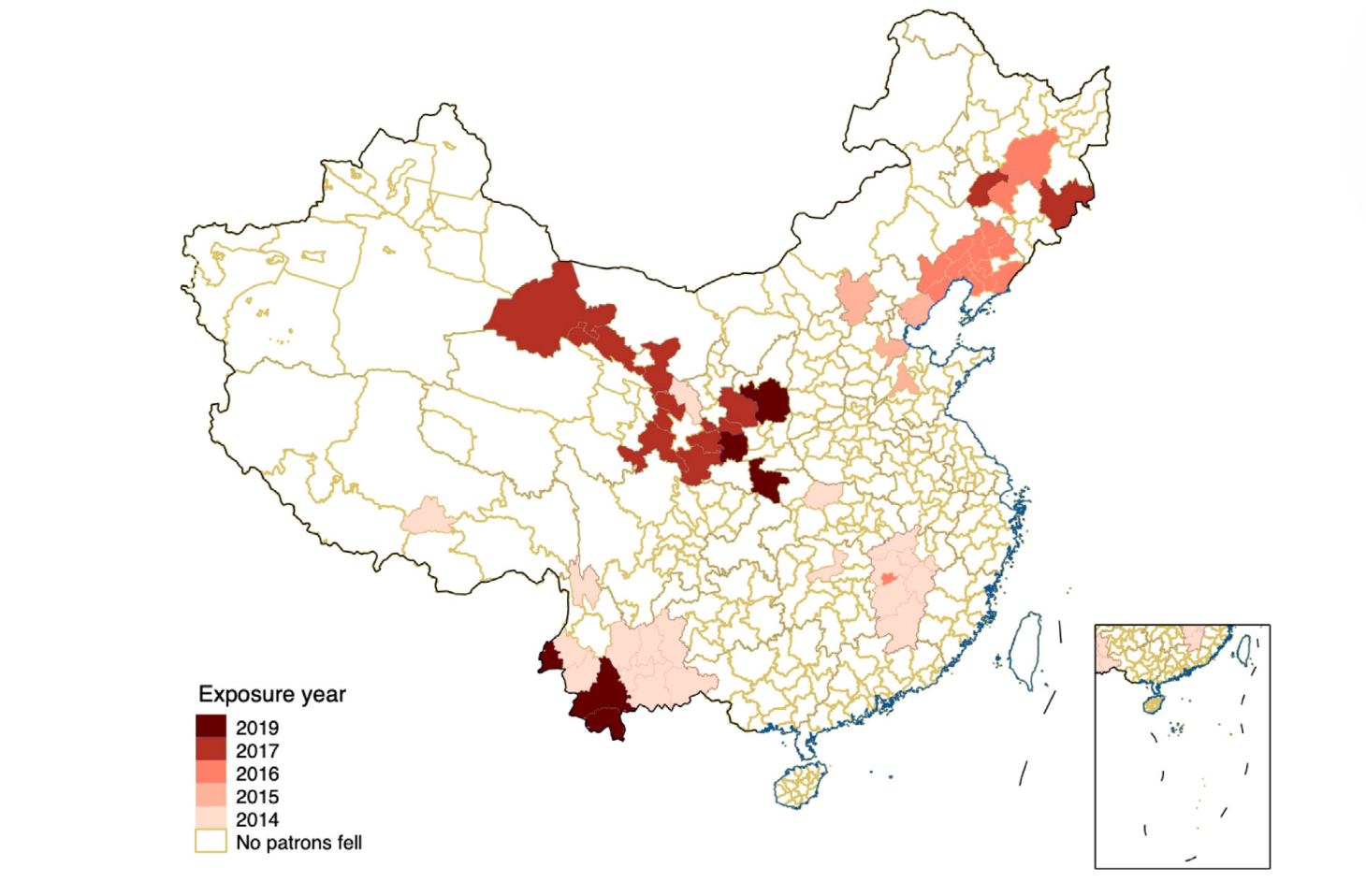
The figure above shows the geographic expansion of the anti-corruption shocks, illustrating the campaign’s deepening reach over time. The authors find that in cities where a local leader’s patron was investigated, nighttime light intensity — a proxy for economic activity that cannot be easily manipulated — declined by 6.8%, corresponding to a 2% drop in GDP.
Importantly, Shen et al. rule out reduced fiscal transfers or changing central policy - the plausible external causes for economic decline. Rather, the results reflect a chilling effect on local officials, who had previously relied on corruption-induced “gray effort” to meet economic goals. Once these behaviors became liabilities, local governments retrenched, slashing land sales, infrastructure spending, and procurement contracts.
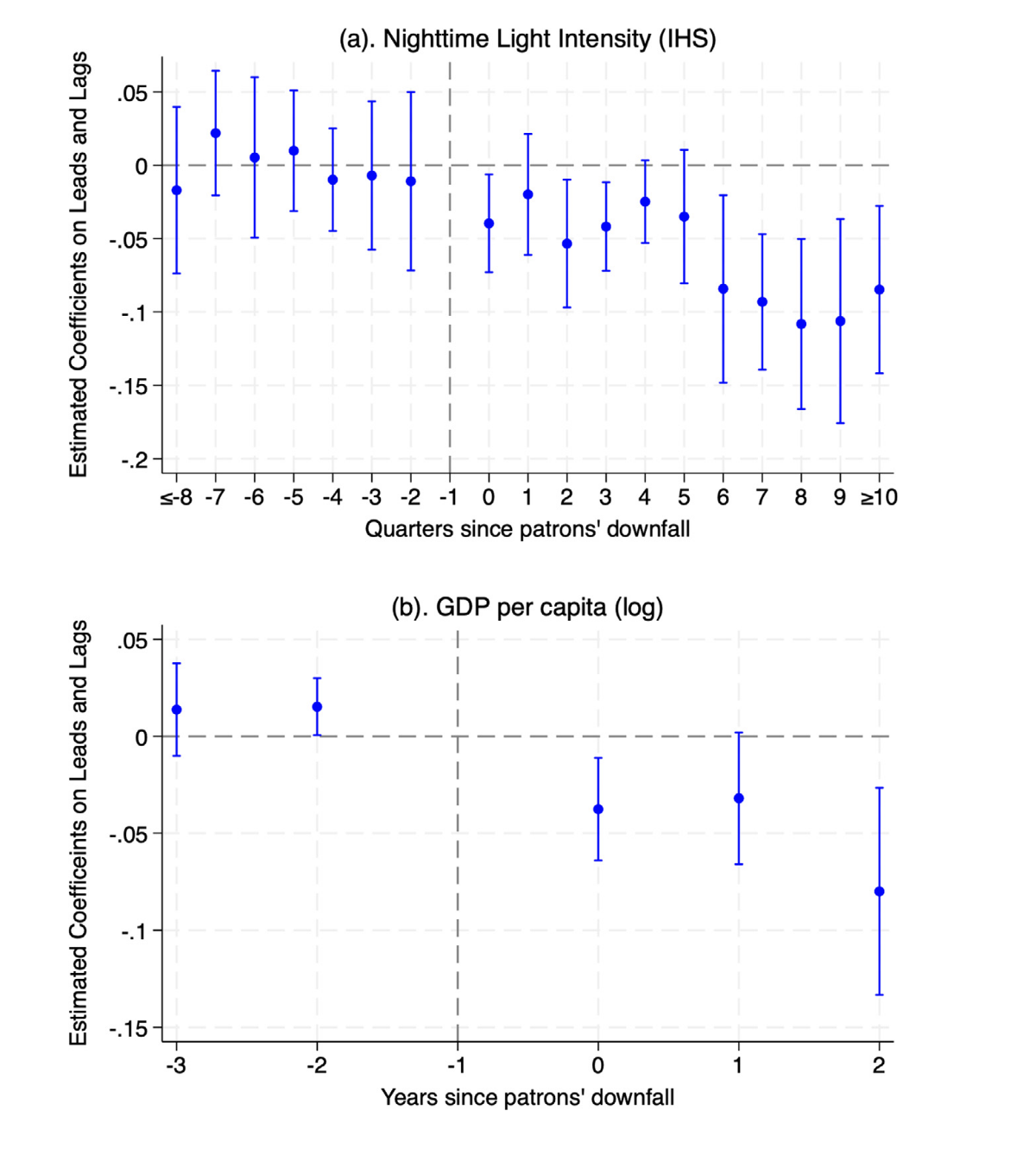
The figure above makes this dynamic clear. The downturn begins only after the political shock and intensifies over time. Meanwhile, firm entry declined, especially in corruption-prone sectors, reinforcing the links between China's entrepreneurial boom and local state connections.
However, officials who continued to deliver high growth post-shock were less likely to be promoted and more likely to be investigated, confirming that under the new rules, economic success had become a political risk. The incentives that once drove ambitious local development were reversed, reducing initiative but also reducing perverse incentives.
Land, and property development, were central to this system. Fang et al. (2019), using over 1 million mortgage transactions in 100+ cities, find that bureaucrats received average housing discounts of 1.05%, rising to nearly 4% for high-ranking officials in real estate-relevant agencies. Developers provided these discounts not for immediate favors, but to cultivate future patronage—a key indicator of the market value of bureaucratic power.
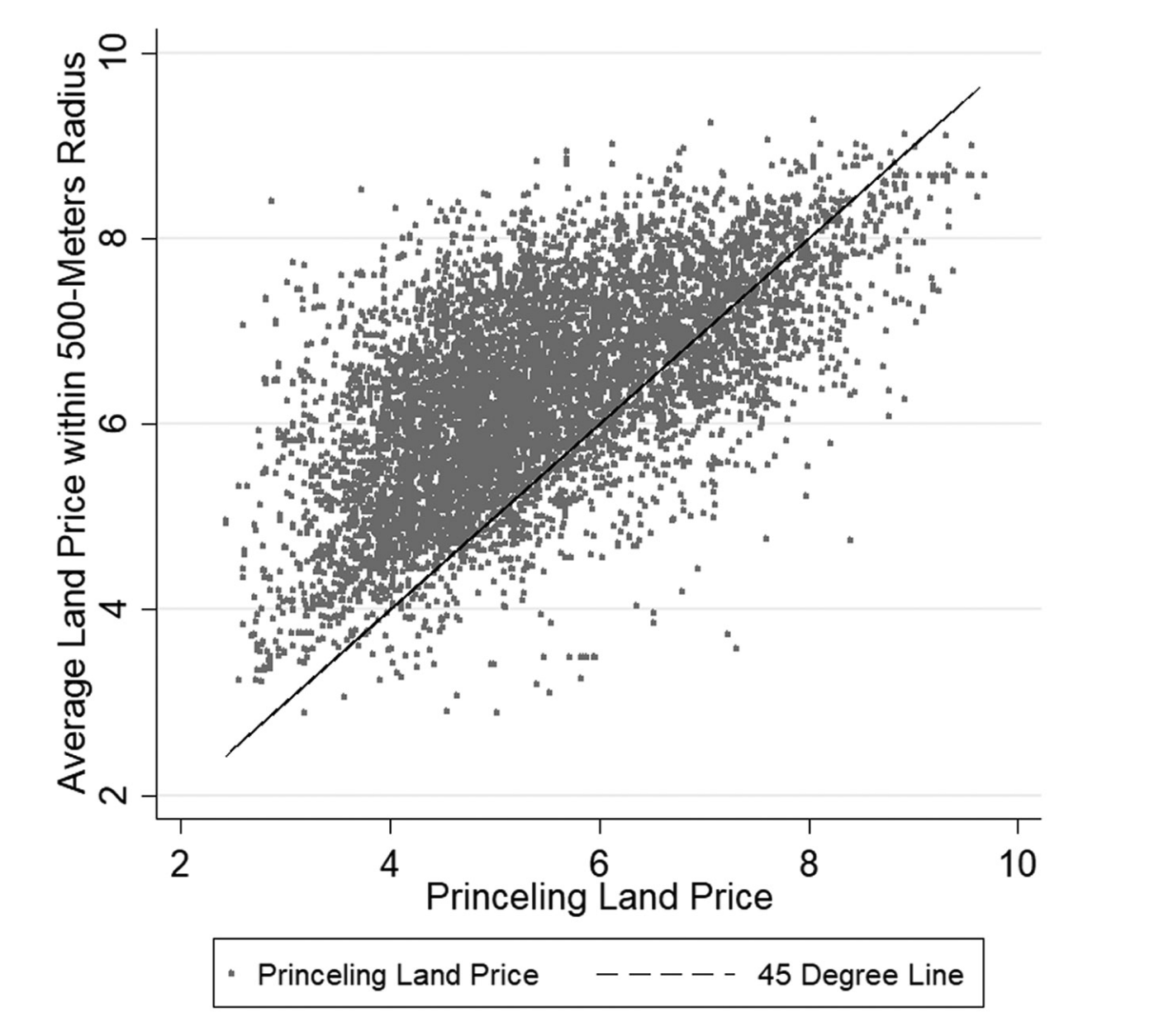
Chen and Kung (2019) analyze over 1.6 million land transactions (2004–2016) and find that firms tied to “princelings” — the politically connected offspring of top officials — paid 55–60% less for land than non-connected firms buying comparable parcels. The figure above paper shows a tight clustering of princeling land purchases below the 45-degree line, confirming systematically lower prices.
Even more revealing is that local party secretaries who facilitated these discounts were 23.4% more likely to be promoted, often using discounted land as political currency. But after Xi’s campaign began, the volume and discount size of princeling purchases fell sharply, especially in provinces targeted by CCDI inspections or where Xi installed new secretaries. Land prices for princeling firms rose by 42–56%, depending on the province and method used, indicating a substantial reduction in elite rent extraction.
The change in the structural incentives bled into not just the discounts received, but in the goods consumed by elite bureaucrats. Lavish banquets featuring shark fin, sea cucumber, imported beef, and especially high-end Baijiu (白酒) had become potent sites of corruption (Shu & Cai 2017). A single vintage bottle of Moutai could cost over ¥1 million (~$160,000), earning it the reputation of being “bribe currency.”
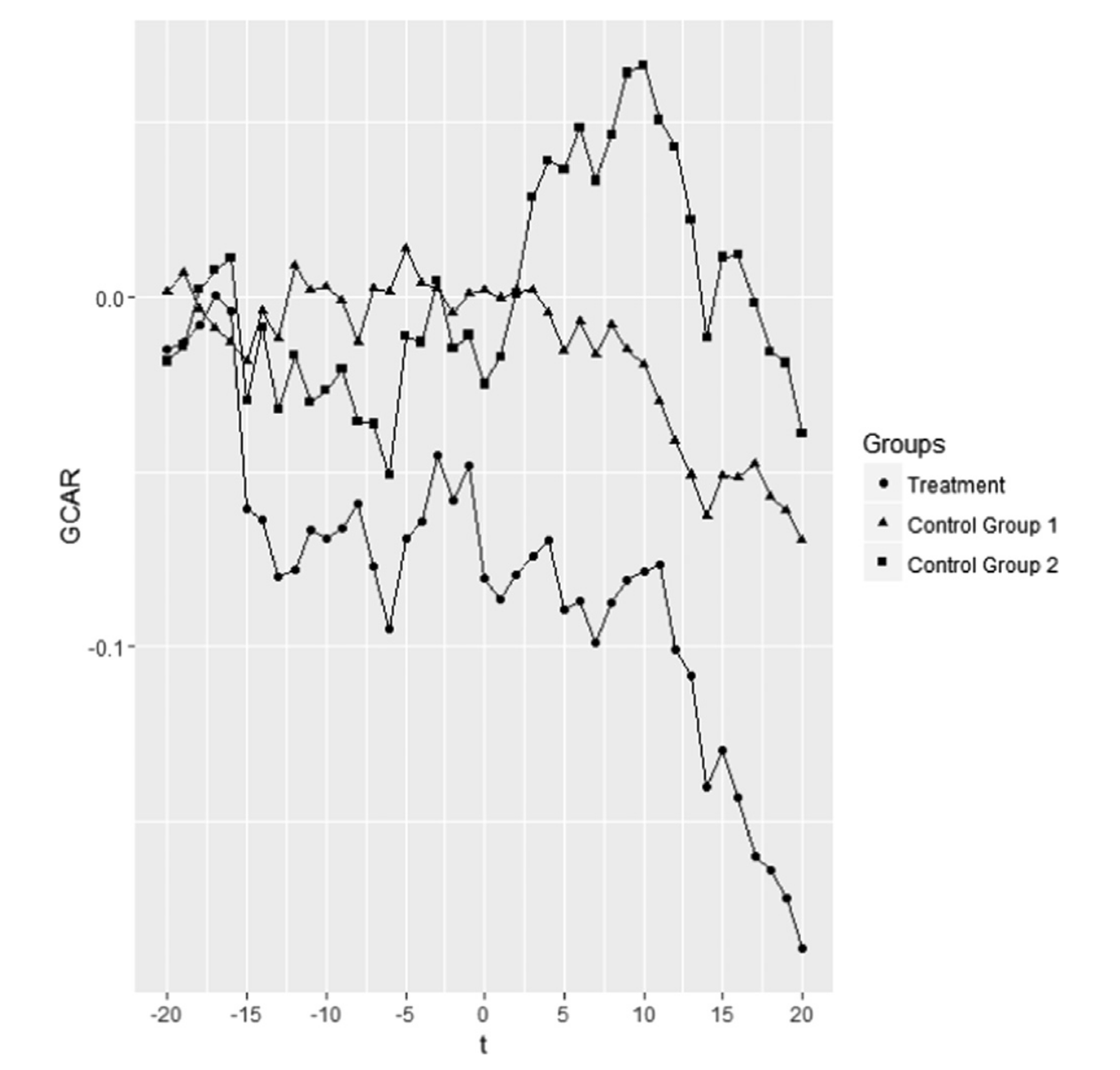
Xi’s 2012 “Alcohol Bans” order and subsequent prohibitions across military and civilian government severely disrupted this informal economy. An event study using stock market returns of Baijiu producers found statistically significant negative abnormal returns following the announcement—indicating that investors believed the government’s crackdown was credible
Roughly 20% of Moutai was consumed by the PLA, with some military units reportedly spending half their reception budgets on alcohol alone.
Qian and Wen (2015) document a broader consumption response - really redirection - by showing that imports of conspicuous luxury goods like jewelry fell by 55% (≈$194 million) post-crackdown, with no comparable drop in inconspicuous luxury goods like art or imported food.
While growth slowed, the anti-corruption drive did trigger real social welfare gains. Shen et al. (2025), referenced earlier, did find improvements in air quality, education spending, and school capacity, suggesting a shift toward higher-quality development. Similarly, Han et al. (2022), using five waves of CFPS survey data, found that the anti-corruption campaign reduced extreme poverty rates in the most corrupt counties by 3.7%, and increased business income and credit access among the poor. However, they found no improvement in basic infrastructure—likely due to officials' loss of personal incentives to push such projects.
One of the more surprising economic effects of the campaign may be that it helped us better measure the Chinese economy. While officials were once notorious for manipulating GDP figures, expertly documented by Jeremy Wallace, Zhang et al. (2025) show the campaign created a temporary “opportunity window” for bureaucrats to reset local baselines.
Local leaders whose predecessors were expelled were more likely to reduce GDP manipulation, as measured by discrepancies between official stats and satellite-derived nighttime lights. Leaders promoted from outside jurisdictions - those less likely to be part of the local elite and more likely to be part of the central elite - were especially likely to correct inflated figures.
The Political Consequences of Fighting Corruption
I hope the scale of the campaign is becoming clear. Per Li and Manion (2023) we need to understand it as a “broad purge”: a distinct category of elite cleansing that targets not just rivals at the top but extends deep into the political bureaucracy, encompassing a large and ambiguously defined group of potential targets. In contrast to traditional “coup-proofing” purges, broad purges do not selectively target threat-bearing cliques; they generate systemic uncertainty that compels risk-reduction strategies across the hierarchy.
Their study focuses on the appointments of Communist Party Secretaries in 333 prefectures between 2013 and 2017, and finds clear evidence that provincial party bosses began biasing promotions away from their own political clients — a phenomenon they call anti-client bias. This strategic distancing served as a signal to Beijing that local leaders were not building informal patronage networks. The authors estimate that each additional purge of a centrally managed (CM) official in a province reduced the probability of a client’s appointment by 2.5 percentage points, a substantial shift given a baseline promotion probability of 8%. Notably, this bias was absent in pre-2013 corruption crackdowns, underlining the unique institutional rupture brought by Xi’s campaign.
But the effects of the campaign went beyond elite selection. Wang (2022) matched 545,753 land auction records to sub-provincial inspection data, and found that anti-corruption inspections caused a sharp decline in bureaucratic activity. In particular, the total area of proposed land development projects dropped significantly following an inspection, suggesting that bureaucrats responded not with cleaner governance but with strategic disengagement.
This “chilling effect” stemmed from the campaign’s enforcement style. Officials, wary of post-hoc investigations into informal but previously tolerated shortcuts, began strictly adhering to rigid procedures, even when these hampered performance.
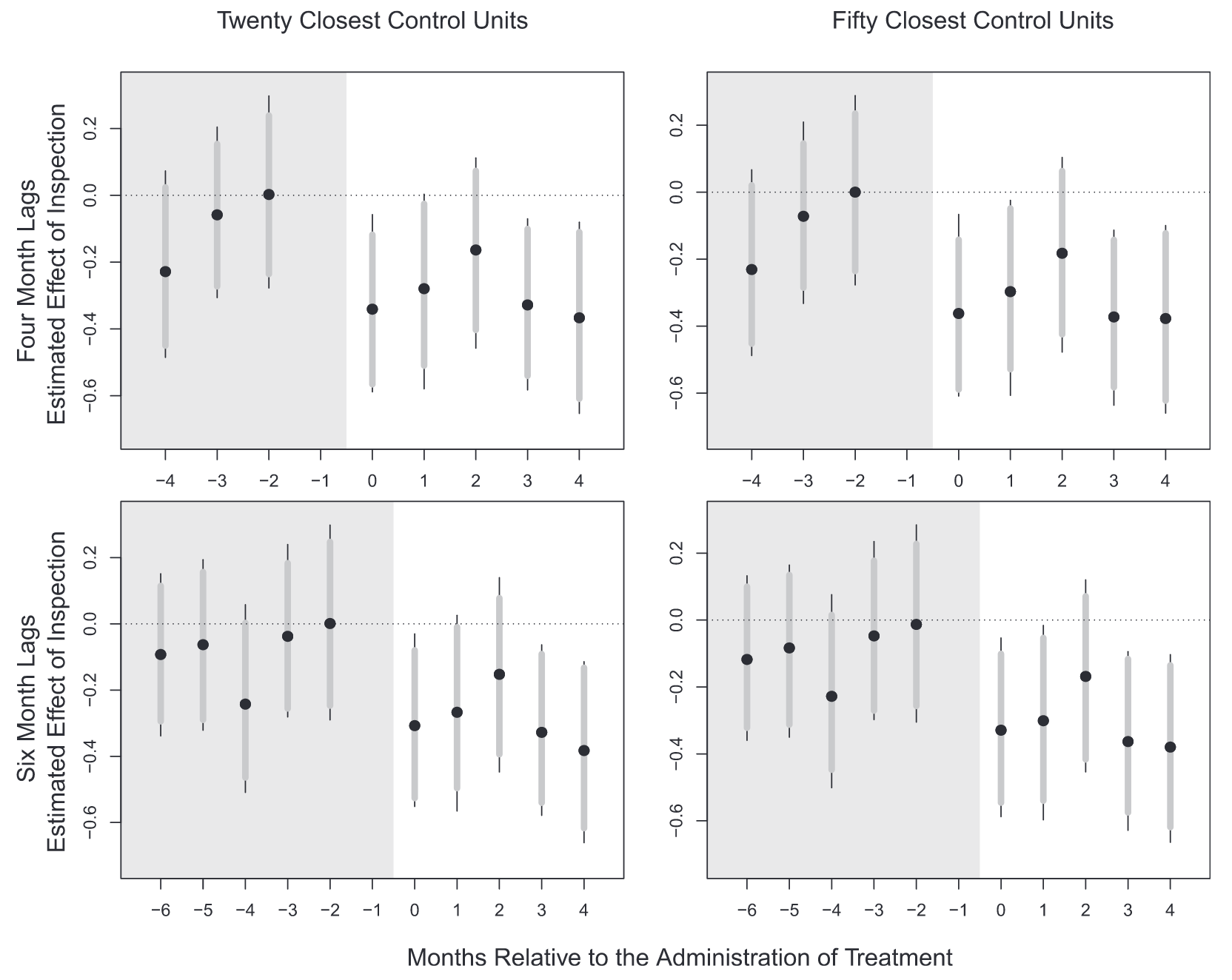
Wang’s causal mediation analysis finds that this effect was not primarily driven by actual corruption reduction but by fear of career punishment. The figure about visualizes the drop in land auction activity post-inspection, reinforcing the conclusion that bureaucratic caution, not productivity, was the dominant response.
Qualitative research by Wang and Yan (2020) echoes these findings. Based on 40 interviews and 98 days of participant observation, they document how officials ceased using banquets and gifts to build patronage ties that previously unlocked new investment. Unable to rely on informal networks, officials instead resorted to "bureaucratic slack" by taking on less initiative and reverting to minimal compliance behavior. Quiet-quitting in today's speak.
A less visible but arguably more significant effect came from how the drive shifted the composition of new entries to the state. Jiang et al. (2022), using a matched panel of anti-corruption enforcement and a nationwide survey of civil servants, identified two selection effects.
First, a deterrence effect: stronger anti-corruption enforcement lowered the expected benefits of public office, especially for high-ability candidates with private-sector alternatives. Second, a compositional effect: candidates from less affluent backgrounds—who are more income-sensitive—were less likely to pursue civil service jobs under intense enforcement. Consequently, the civil service became more elite, with rising shares of recruits drawn from official families and affluent urban households.
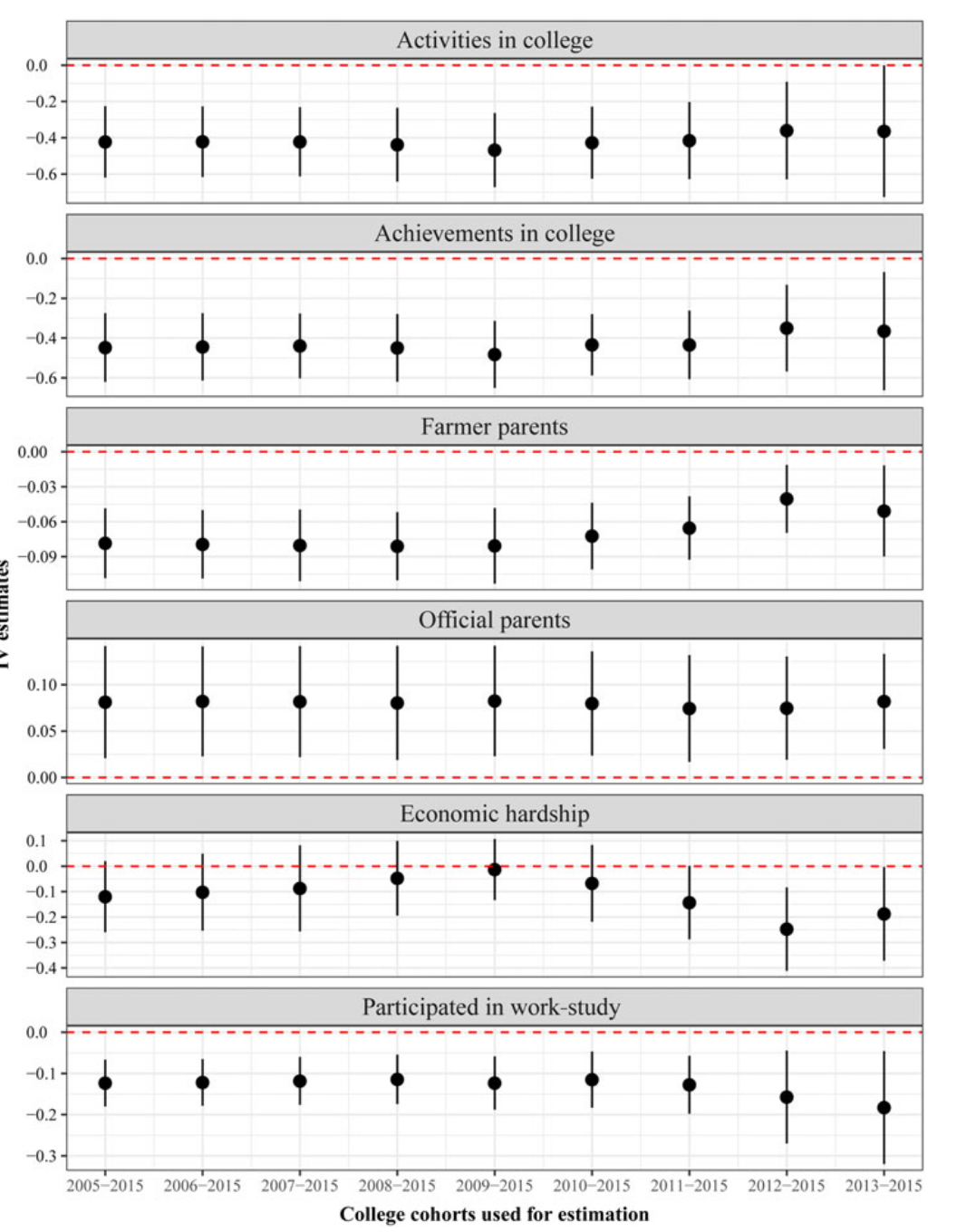
The figure above shows the range of ways in which new recruits differed from prior cohorts. In high-enforcement provinces, there were significant drops in civil servants from rural or working-class backgrounds. Importantly, these new recruits also displayed less support for redistributive policies, suggesting long-run policy implications of elite-biased recruitment.
So regardless of whether you see the anti-corruption drive as driven by economic or strategic imperative, the effects point a shift from a system lubricated by informal networks to one defined by institutionalized caution and centralized control. What the campaign gained in anti-corruption credibility and elite discipline, it may have lost in bureaucratic responsiveness and initiative.
Zhong and Zeng (2024) provide further evidence through a survey experiment with 923 bureaucrats, showing that disciplinary risk decreases bureaucratic responsiveness by 17.7%. Their data suggest that uncertainty over sanctions, even for minor violations, leads to pervasive self-censorship and risk aversion. While “principled tolerance” policies modestly improve willingness to act, they cannot fully undo the chilling effects of top-down accountability pressure.
In 2014, Xi defended the perceived power consolidation by saying “People hate corruption the most, so we must be determined to fight against corruption to win support from the people.” It's unclear that plan came to fruition
Wang and Dickson (2022) use a difference-in-differences design leveraging two original surveys conducted before and during China’s crackdown. Their results show that exposure to more corruption investigations decreases support for the regime, despite intentions to signal state benevolence. The mechanism is what they call “informed disenchantment”: the more officials are punished, the more citizens revise upward their beliefs about the baseline level of corruption, leading to declining trust in institutions. But there might be a disjuncture between effects on the perception of the country versus specific leaders.
Tsai et al. (2022) show that local officials who punish subordinates for corruption are viewed more positively. In two conjoint experiments, respondents preferred township secretaries who took disciplinary action—interpreting this as evidence of both competence and moral commitment. Punishment increased support by over 20%, nearly matching the effect sizes of growth and welfare provision.
This largely tracks Tocqueville's paradox: reforms raise expectations—and when those expectations aren't met, public opinion can turn against the reformer.
The anti-corruption campaign did not merely discipline. It reengineered the political incentives and behaviors of China’s governing elites. Beyond purging over 1.4 million officials, the campaign reshaped elite promotion patterns, altered the calculus of bureaucratic initiative, and changed who enters the state. The net effect was an atmosphere of pervasive uncertainty, fostering risk aversion and strategic disengagement at every level of the political system.